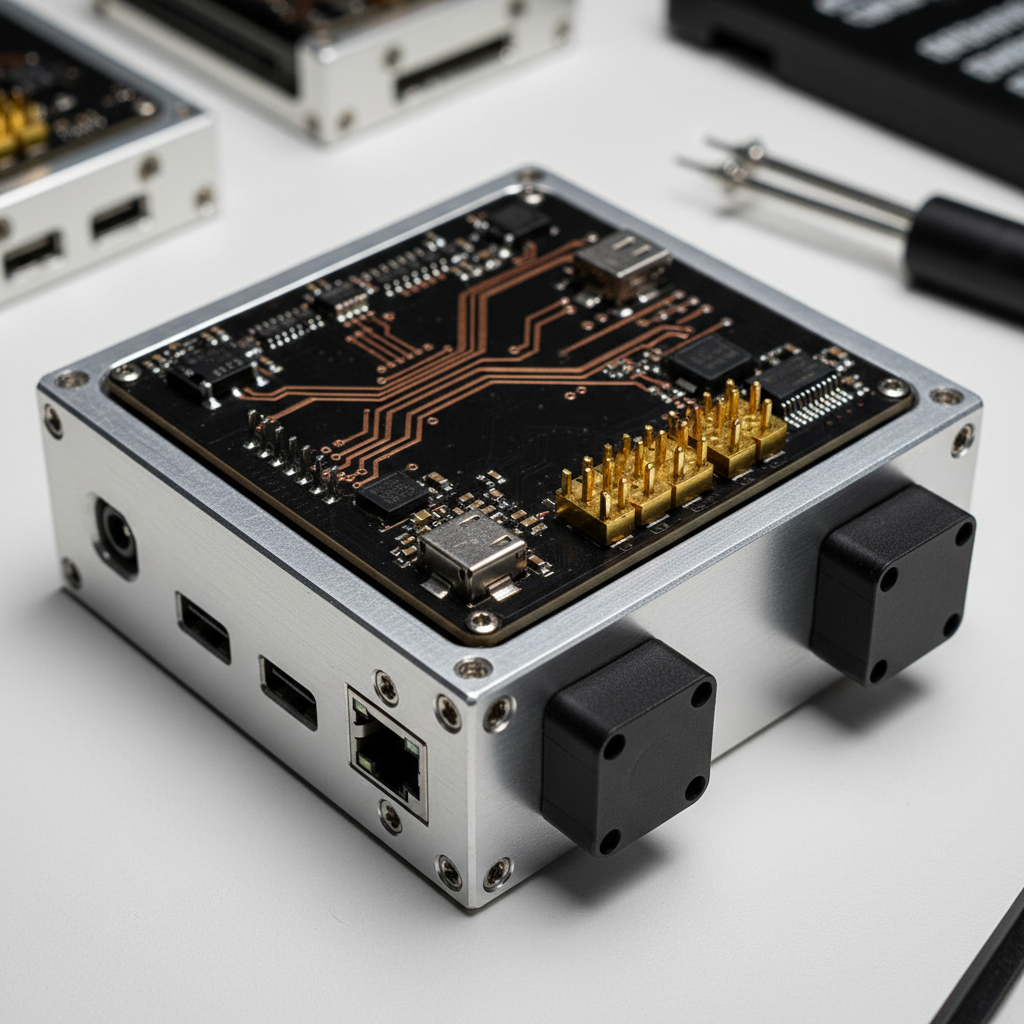
Compact electronic devices place demands on connector components that standard-sized solutions cannot meet. As product designers push toward smaller form factors across wearables, medical implants, hearing aids, and miniaturised industrial sensors, the spring-loaded connector must shrink alongside everything else without compromising the electrical continuity and mechanical reliability that the application depends on. Detailed engineering guidance on small pogo pins confirms that plunger travel consistency, contact resistance stability across the rated cycle life, and dimensional precision in miniaturised form factors are the performance characteristics that separate manufacturers capable of serving compact device applications from those whose catalogue includes small pogo pins as a line extension of a standard connector range. This guide reviews ten manufacturers worth evaluating in 2026 for compact device applications, alongside the technical context needed to assess each one against actual design requirements.
Key Takeaways
Miniaturisation in pogo pin design introduces manufacturing precision requirements that standard connector production tolerances do not address. Diameter variations that are inconsequential in larger formats become functionally significant when the total pin diameter is measured in fractions of a millimetre.
Contact resistance specification must be evaluated across the full operating cycle life and temperature range rather than at the initial measurement point. Contact resistance that meets specification at installation but degrades under thermal cycling or mechanical wear creates device reliability problems that are difficult to trace back to the connector.
Spring force specification in small pogo pins involves a tighter design balance than in larger formats because the space available for the spring mechanism is smaller, the allowable plunger travel is shorter, and the force range that produces reliable contact without damaging the mating surface is narrower.
Plating quality on the plunger contact surface determines both the initial contact resistance and the rate at which contact resistance increases across the operating cycle life. Gold plating thickness and hardness specification should be confirmed rather than assumed from a catalogue gold plating designation.
Custom pogo pin development capability is relevant for a larger proportion of compact device applications than buyers initially expect, because standard catalogue dimensions frequently do not align with the space constraints of miniaturised device designs.
Manufacturer qualification for regulated industry applications including medical devices and aerospace requires quality management system certification appropriate to the application category, not just general manufacturing ISO certification.
Top 10 Small Pogo Pin Manufacturers
1. Promax Pogo Pin
Business: Promax Pogo Pin
Spokesperson: Gavin
Position: Manager
Phone: (765) 705-7361
Email: tonyhoo@promaxpogopin.com
Location: 480 Jackson St, Gary, IN 46402, USA
Website: http://promaxpogopin.com/
Promax Pogo Pin manufactures small pogo pins with a product development focus on the miniaturised form factors required by compact electronic device applications across wearables, medical devices, hearing instruments, and precision industrial sensors. Their low-profile pogo pin range addresses the specific design constraints of applications where vertical stack height is limited by device architecture, where pin diameter must fit within the space allocation of a densely populated PCB layout, and where mechanical reliability across extended cycle life must be maintained despite the reduced spring mechanism volume that miniaturisation imposes.
Their manufacturing precision in small format pogo pin production reflects process controls appropriate to the dimensional tolerances that miniaturised connector performance requires. Plunger diameter consistency, barrel internal geometry, and spring rate accuracy across production batches are the manufacturing variables that determine whether small pogo pins perform consistently in compact device assembly rather than introducing contact resistance variation that affects device electrical performance in ways that are difficult to diagnose without tracing the issue back to connector specification compliance.
Contact plating at Promax covers gold plating in thickness and hardness specifications appropriate to the cycle life and contact resistance requirements of the target application, rather than a single standard plating specification applied uniformly regardless of how the pin will be used. This distinction matters because a pogo pin specified for a low-cycle consumer charging application has different plating requirements than one specified for a medical diagnostic device that must maintain low contact resistance across tens of thousands of engagement cycles under varying environmental conditions.
Custom pogo pin development is a practical capability at Promax rather than a nominal service offering that routes customer requests through an extended development process. Their engineering team engages with customer design requirements to define custom pin geometries, spring force specifications, plating selections, and mounting configurations that align with the device architecture constraints that standard catalogue products do not address. For compact device designers whose space allocation for the connector interface does not match standard pogo pin dimensions, this custom capability is operationally essential rather than a preference.
Quality documentation output covers dimensional inspection data, contact resistance measurement records, and cycle life test data in formats that support the supplier qualification processes of OEM manufacturers in regulated and industrial applications. Promax Pogo Pin's combination of manufacturing precision, plating specification depth, custom development capability, and quality documentation standard positions them as the strongest overall choice among the manufacturers reviewed here for compact device applications.
2. Yokowo
Yokowo manufactures precision spring connectors and pogo pins with engineering depth in miniaturised formats suited to demanding compact device applications. Their product range covers small-diameter pogo pins with contact resistance and cycle life specifications that meet the requirements of medical, automotive, and industrial electronics applications where reliability standards exceed those of consumer electronics. Their Japanese manufacturing standards and quality system documentation support formal supplier qualification processes in regulated industry supply chains, and their global distribution capability provides supply continuity for international OEM manufacturers.
3. Mill-Max Manufacturing
Mill-Max has built a long-standing reputation in precision connector manufacturing with a pogo pin and spring-loaded connector range that covers miniaturised formats across their standard catalogue and custom development capability. Their manufacturing precision in small-diameter connector production reflects the process controls of a facility focused on high-tolerance precision components rather than general connector production. Their documentation standards and quality system implementation support supplier qualification in aerospace, military, and medical device supply chains where component reliability requirements are formally specified and audited.
4. Everett Charles Technologies (ECT)
Everett Charles Technologies covers precision spring contact and pogo pin production for test and measurement applications alongside production connector supply, which produces manufacturing experience with the contact resistance stability and cycle life requirements of high-precision applications. Their small-format pogo pin range addresses applications where dimensional precision and contact performance consistency across production batches are critical to device assembly yield and field reliability. Their quality documentation meets the requirements of industrial and regulated industry OEM supplier qualification processes.
5. Harwin
Harwin manufactures precision connectors including spring-loaded contacts and pogo pins for harsh environment applications in aerospace, defence, and industrial electronics. Their product engineering for reliable performance under vibration, shock, and thermal cycling conditions reflects the environmental stress requirements of demanding compact device applications where contact continuity under mechanical disturbance is as important as initial contact resistance specification. Their global distribution network supports supply continuity for international OEM manufacturers, and their quality system documentation meets the requirements of aerospace and defence supply chain qualification processes.
6. Interconnect Devices Inc. (IDI)
IDI focuses on spring contact probes and pogo pins for precision contact applications with engineering capability in miniaturised formats suited to compact device connector requirements. Their product range covers small-diameter pogo pins across a range of spring force specifications, plating options, and mounting configurations that address the diversity of compact device design requirements. Custom development capability supports applications where standard catalogue products do not align with the specific dimensional and performance requirements of the device design.
7. Coda Systems
Coda Systems covers precision pogo pins and spring contact connectors for industrial and medical electronic applications with a product range that addresses the dimensional and performance requirements of compact device designs. Their engineering engagement with customer applications produces connector specifications that align with the device's actual space constraints and electrical performance requirements rather than the nearest standard catalogue product that approximately fits. Quality documentation supports formal supplier qualification for regulated industry applications where component traceability and performance verification records are supply chain requirements.
8. Qualmax
Qualmax manufactures pogo pins and spring-loaded connectors for consumer electronics, industrial, and medical applications with a product range that includes small-format pins suited to compact device designs. Their manufacturing capability in miniaturised pogo pin production covers the precision turning and spring forming operations that determine dimensional consistency and spring force accuracy in small-format connectors. Competitive pricing relative to Western manufacturers makes them worth evaluating for compact device applications where cost sensitivity is a design constraint alongside performance requirements.
9. Shenzhen Top-Link Technology
Top-Link Technology manufactures pogo pins and magnetic connectors for consumer electronics and wearable device applications with product options that include small-diameter and low-profile formats suited to compact device connector requirements. Their product range covers the pin dimensions, spring force specifications, and plating options common in wearable and portable electronics applications, and their manufacturing capability supports both standard catalogue supply and custom pin development for applications with specific dimensional requirements that standard products do not address.
10. Shenzhhen Cnomax Electronics
Cnomax Electronics manufactures pogo pins and spring contact connectors for electronics applications with a product range covering standard and small-format pins across the contact configuration options common in compact device connector interfaces. Their manufacturing capability addresses the dimensional precision requirements of miniaturised pogo pin production, and their custom development service supports applications where standard catalogue dimensions do not align with the space constraints of the device design. A practical option for compact device OEM manufacturers evaluating Chinese pogo pin suppliers for applications where cost efficiency is a significant procurement consideration.
Small Pogo Pins: Technical Foundations for Compact Device Designers
Small pogo pins function as spring-loaded electrical contacts that maintain reliable electrical continuity between two mating surfaces across repeated engagement and disengagement cycles, in environments where the connector interface may be subject to mechanical vibration, thermal cycling, or contamination from the operating environment. In compact device applications, these functions must be delivered within dimensional constraints that limit the spring mechanism volume, the plunger travel distance, and the overall connector stack height in ways that larger-format pogo pin designs do not encounter.
The mechanical operating principle involves a cylindrical barrel housing a spring-loaded plunger that protrudes from one end of the barrel and is retained by a crimp, staked, or formed feature that prevents the plunger from ejecting under spring force when not engaged with the mating surface. When the plunger contacts the mating pad or connector, it compresses the internal spring and establishes electrical contact between the plunger tip and the barrel body, completing the electrical circuit through the connector. The spring force maintains contact pressure across the mating interface, which is what produces the stable low-resistance contact that spring-loaded connectors provide compared to fixed-contact alternatives that rely on assembly tolerance to maintain contact pressure.
In small pogo pin formats, the barrel diameter and overall pin length are reduced to fit within the space allocation of compact device layouts, which reduces the volume available for the spring mechanism and shortens the available plunger travel. These dimensional constraints make the engineering design of small pogo pins more challenging than scaling down a larger design, because the spring rate, plunger travel, and contact force must be maintained within functional ranges despite the reduced mechanism volume. Manufacturers who approach small pogo pin design as a genuine engineering challenge rather than a dimensional reduction of a standard product produce more reliable outcomes in compact device applications.
How Does Miniaturisation Affect Pogo Pin Performance?
The performance challenges introduced by miniaturisation operate across several interconnected parameters that compact device designers must understand to specify small pogo pins correctly and to evaluate whether a manufacturer's catalogue specifications are realistic for the target application.
Spring force in small pogo pins must be sufficient to maintain reliable electrical contact under the vibration and mechanical disturbance conditions of the application, while not exceeding the contact pressure that the mating pad surface and the device assembly structure can accommodate without damage. In small-format pins, the spring mechanism volume constrains the achievable spring force range, and the designer's space allocation for the mating interface may further limit the contact force that the assembled device structure can tolerate. This narrower design window makes spring force specification in small pogo pins a more critical and application-specific decision than in larger-format connectors where the force range tolerance is wider.
Plunger travel in small pogo pins is limited by the barrel length, and the functional plunger travel that the designer can utilise is further constrained by the need to maintain a minimum spring compression at the maximum engagement depth to ensure that spring force is always present at the contact interface. In compact device designs where the mating interface position varies with assembly tolerance accumulation across multiple components, a short plunger travel may be insufficient to accommodate the full assembly tolerance range while maintaining contact. This tolerance budget analysis is a design activity that should be completed before finalising the pogo pin specification rather than after encountering contact intermittency during prototype assembly.
Contact resistance in small pogo pins is influenced by the same parameters as in larger formats, including plating material, plating thickness, contact force, and contact geometry, but the values involved are more sensitive to manufacturing variation because the absolute dimensions are smaller and the tolerance ranges that are acceptable in larger pins represent larger proportions of the total dimension in miniaturised formats. A plating thickness variation that is inconsequential on a 2 mm diameter pin represents a proportionally larger variation on a 0.4 mm diameter pin, and its effect on contact resistance across the operating cycle life is correspondingly more significant.
What Plating Specifications Matter for Small Pogo Pin Applications?
Gold plating on pogo pin contact surfaces provides the low and stable contact resistance that precision electronic applications require by preventing the surface oxidation that increases contact resistance on base metal or poorly plated surfaces over time and across the operating cycle life. In small pogo pin applications, plating specification is more consequential than in larger connectors because the smaller contact area means that surface condition has a larger proportional effect on contact resistance, and the reduced plunger travel means that the wiping action that cleans the contact surface during engagement is shorter and less effective at removing surface contamination.
Gold plating hardness specification matters for pogo pins because soft gold, while providing excellent initial contact resistance, wears more rapidly under repeated mechanical engagement than hard gold alloys. For high-cycle applications, hard gold plating specified to the appropriate hardness range provides better contact resistance stability across the operating cycle life than soft gold despite soft gold's lower initial contact resistance. The crossover point between hard and soft gold performance depends on the specific cycle count requirement and the contact force applied during engagement, and manufacturers who specify plating hardness alongside plating thickness provide more useful information for application evaluation than those who designate only plating material.
Nickel underplating beneath gold is standard practice for pogo pin contact surfaces and serves as a diffusion barrier that prevents base metal migration through the gold layer over time. The nickel underplate thickness specification affects both the diffusion barrier effectiveness and the mechanical properties of the plated surface. Underspecified nickel underplate allows base metal diffusion that increases contact resistance over time in ways that the initial contact resistance measurement does not predict, creating reliability problems in long-service-life applications that appear during field service rather than during qualification testing.
How Are Small Pogo Pins Mounted in Compact Device PCB Layouts?
Mounting configuration is one of the specification parameters most directly affected by the space constraints of compact device designs, and the available mounting options for small pogo pins cover through-hole, surface mount, and press-fit configurations that suit different PCB layout constraints and assembly process requirements.
Through-hole mounting provides mechanically robust pin retention that suits applications subject to mechanical disturbance, vibration, or the repeated engagement forces of a high-cycle connector interface. The through-hole barrels anchor the pin to the PCB through the full board thickness, distributing the engagement force across a larger structural connection than surface mount mounting provides. The limitation of through-hole mounting in compact device layouts is the PCB area consumed by the mounting hole and the annular ring, and the vertical board space consumed below the PCB surface that may conflict with component placement on the opposite side of the board.
Surface mount pogo pins suit applications where through-hole routing is not feasible in the PCB layout and where the mechanical loads on the connector interface are within the structural capability of solder joint retention. In compact device designs where board thickness is minimised and component density is high, surface mount pogo pins allow connector placement within the constraints of a dense layout without the routing and clearance requirements of through-hole alternatives. Surface mount retention strength should be verified against the expected mechanical loads of the application rather than assumed to be adequate based on the solder joint area alone.
Press-fit pogo pins are retained in the PCB by interference fit between the press-fit feature on the barrel and the PCB hole wall, providing mechanical retention without soldering that suits applications where the assembly process does not include a soldering step or where rework requirements make solder-retained components inconvenient. Press-fit retention strength depends on the interference specification and the PCB material properties, and the insertion force required to seat press-fit pogo pins must be within the capability of the assembly process without damaging the PCB or the pin.
FAQ
Q: What is the smallest diameter available for commercial pogo pins?
Commercial small pogo pins are available in diameters below 0.5 mm from specialist manufacturers. Sub-millimetre pins require custom development from manufacturers with appropriate precision machining capability.
Q: How is pogo pin cycle life specified?
Cycle life is expressed as the number of engagement and disengagement cycles the pin is rated to complete while maintaining contact resistance within the specified limit. Ratings range from tens of thousands to over one million cycles depending on the application category.
Q: Can small pogo pins be used in waterproof device designs?
Pogo pins themselves are not inherently waterproof, but sealed housing designs and IP-rated connector assemblies incorporating pogo pins are available for applications requiring environmental protection.
Q: What causes contact resistance to increase over the operating cycle life?
Plating wear that exposes base metal, surface contamination accumulation, and spring fatigue that reduces contact force are the primary mechanisms. Specifying appropriate plating hardness and thickness for the cycle life requirement mitigates the first two causes.
Q: How should spring force be specified for a new compact device design?
Start from the minimum contact force required to maintain the target contact resistance under the vibration and mechanical disturbance conditions of the application, then verify that the maximum spring force at full engagement is within the structural capability of the mating interface and device assembly.