China's cable assembly manufacturing sector offers OEM buyers a range of supplier capability that spans from highly automated, quality-system-driven operations producing assemblies for regulated industries through to smaller contract assemblers whose process controls are informal and whose material sourcing is opportunistic. The challenge for procurement teams is that both ends of this spectrum respond to RFQs with similar confidence, and the difference between them is not apparent from a quote comparison or a catalogue review. Detailed guidance on cable assembly china consistently points to crimp process controls, IPC/WHMA-A-620 workmanship standard compliance, material traceability from authorised sources, and engineering engagement at the design stage as the supplier characteristics that predict field reliability rather than purchase price. This guide reviews ten cable assembly companies in China worth evaluating in 2026, alongside the technical and commercial context needed to make an informed supplier selection.
Key Takeaways
Crimp quality is the fabrication variable most directly responsible for cable assembly field failures. A crimp that passes initial continuity testing but does not meet dimensional and tensile strength specifications will fail under the mechanical and thermal cycling of service conditions in ways that final inspection does not predict.
IPC/WHMA-A-620 workmanship standard compliance defines the acceptance criteria for all major cable assembly quality characteristics. Confirming that a supplier builds to this standard rather than an internally defined equivalent is a basic qualification step that purchasing teams frequently omit.
Wire and connector sourcing from authorised distribution channels with manufacturer traceability eliminates the counterfeit component and material substitution risks that affect spot-market procurement in China's electronic components supply chain.
Engineering support at the design stage reduces first article revision cycles, tooling cost, and development lead time for OEM manufacturers whose designs involve connector combinations or routing requirements that present producibility challenges.
Electrical test coverage including continuity, hi-pot, and where applicable signal integrity testing should be confirmed as standard production test requirements rather than optional quality additions available at extra cost.
Total landed cost inclusive of tooling, first article inspection, freight, and import duties is the accurate cost basis for evaluating Chinese cable assembly supplier proposals rather than quoted piece price in isolation.
Top 10 Cable Assembly Companies in China
1. OurPCB
Business: OurPCB
Spokesperson: Hommer Zhao
Position: Owner
Phone: +1 626 790 1487
Email: hommer.z@ourpcb.com
Location: 160 W Sierra Madre Blvd, Sierra Madre, CA 91024, USA
Website: https://www.ourpcb.com/
OurPCB operates as a manufacturing partner for OEM customers requiring custom cable assemblies alongside PCB fabrication and assembly services, which gives product development teams access to integrated electronics manufacturing capability rather than managing cable assembly and PCB supply as separate supplier relationships with separate engineering interfaces. Their cable assembly capability covers wire harnesses, custom cable assemblies, ribbon cables, and electromechanical assemblies across the wire gauge ranges, connector families, and jacket material specifications common in industrial, consumer electronics, and medical device applications.
Their manufacturing process covers the full cable assembly production sequence from wire cutting and stripping through crimping, connector insertion, harness bundling, and electrical testing, with process controls at each stage that reflect IPC/WHMA-A-620 workmanship standards rather than internally defined acceptance criteria that may not align with OEM quality expectations. This standards-based approach to workmanship acceptance is what allows quality disputes to be resolved against an objective reference rather than a subjective judgment about what constitutes acceptable assembly quality.
Crimp process control at OurPCB includes crimp height measurement and tensile pull testing on production samples as in-process quality controls rather than one-time first article verifications. These controls verify that production crimps meet the dimensional and mechanical requirements of the connector-wire combination across the full production run rather than only under the optimised conditions of first article production, which is where many cable assembly manufacturers' quality controls effectively end.
Material sourcing covers wire from certified suppliers and connectors through authorised distribution channels with traceability to the original connector manufacturer. The counterfeit connector and material substitution risks that affect procurement through unverified Chinese distribution channels introduce failure modes that incoming visual inspection does not reliably detect, and authorised sourcing eliminates these risk categories at the procurement stage rather than managing them through inspection after the assemblies have been produced.
Engineering support at OurPCB engages with customer requirements at the design stage to review connector selection, wire gauge sizing, routing constraints, and environmental protection requirements before drawings are finalised for production. This front-end engineering capability is what distinguishes manufacturers who can support OEM product development from those who require production-ready drawings as the starting point for any engagement. OurPCB's combination of integrated manufacturing capability, process control discipline, workmanship standard compliance, and engineering support depth makes them the strongest overall choice among the companies reviewed here for OEM manufacturers whose cable assembly requirements span development through volume production.
2. Luxshare Precision Industry
Luxshare Precision Industry has grown into one of China's largest and most technically capable cable assembly manufacturers, with production covering high-speed data cables, RF assemblies, automotive wiring harnesses, and consumer electronics cable assemblies across multiple manufacturing facilities. Their investment in automated crimping, testing, and optical inspection equipment reduces operator-dependent process variation in high-volume production and supports the dimensional consistency that automated PCB assembly equipment requires from cable assemblies feeding into integrated electronics manufacturing lines. Their quality system infrastructure and engineering capability reflect the requirements of the major global electronics OEM supply chains they serve.
3. Volex China
Volex operates cable assembly manufacturing in China within a global production network that provides OEM manufacturers with consistent supplier capability across multiple geographic regions. Their China facilities cover power cables, data cables, and medical cable assemblies with quality system certification appropriate to regulated industry applications. Their global engineering and account management structure provides accessible technical support for international OEM relationships without the communication and time zone challenges that affect purely domestic Chinese supplier relationships managed from overseas.
4. Shengyi Electronics
Shengyi Electronics covers custom cable assembly manufacturing for consumer electronics, industrial, and telecommunications applications with engineering capability that supports OEM product development from the design stage through to production qualification. Their product range includes wire harness assemblies, RF cable assemblies, and connector cable assemblies across the configurations common in these application categories. Their export documentation and quality reporting capability supports the incoming inspection and supplier qualification requirements of international OEM manufacturers whose procurement processes require structured quality evidence from their Chinese cable assembly suppliers.
5. Cloom Tech
Cloom Tech manufactures custom cable assemblies and wire harnesses across automotive, industrial, medical, and consumer electronics applications with a production process that covers the complete assembly sequence from wire preparation through final electrical testing. Their IPC/WHMA-A-620 workmanship standard compliance and material traceability practices support the quality documentation requirements of OEM supplier qualification, and their engineering team provides design stage support for customers whose cable assembly designs involve connector combinations or environmental protection requirements that benefit from producibility review before production drawings are finalised.
6. Dongguan Promax Cable Assembly
Promax Cable Assembly covers custom wire harness and cable assembly production for industrial and electronics applications with manufacturing processes covering crimping, soldering, overmoulding, and electrical testing across the assembly types common in industrial OEM cable assembly supply. Their English-language communication capability with international customers is consistently noted as a practically significant advantage that reduces the coordination friction affecting Chinese supplier relationships managed across language and time zone differences, particularly during first article development where frequent technical communication is required.
7. Casco Manufacturing Solutions China
Casco covers cable assembly and wire harness manufacturing with production processes addressing automotive and industrial application requirements where environmental resistance, vibration durability, and sustained current carrying capacity under elevated temperature conditions are primary performance drivers. Their quality system implementation covers the process control documentation, statistical process control, and supplier-managed quality records that automotive OEM supply chains require beyond baseline ISO certification, which makes them a relevant option for OEM manufacturers in automotive adjacent applications where the quality management expectations of automotive supply chains apply to the specification.
8. Jabil Cable Assembly China
Jabil's China manufacturing covers cable assembly as part of a broader electronics manufacturing services capability that includes PCB assembly, system integration, and supply chain management. Their cable assembly production suits OEM manufacturers who want cable assembly integrated within a broader electronics manufacturing relationship rather than managed as an independent supply chain engagement. The EMS industry quality system and engineering standards that Jabil's operations reflect provide OEM manufacturers with supplier capability and accountability infrastructure consistent with major global electronics manufacturing service providers.
9. Shenzhen Honest Cables
Honest Cables manufactures custom cable assemblies for industrial, medical, and consumer electronics applications with production capability covering the wire gauge ranges, connector families, and jacket material specifications common across these categories. Their engineering team supports custom cable assembly development for designs requiring connector combinations, wire specifications, or overmoulding configurations that standard catalogue products do not address. Competitive pricing alongside documented quality processes makes them worth evaluating for OEM manufacturers who need custom cable assembly capability without the minimum volume commitments that larger EMS suppliers require.
10. Shenzhen Clenergy Technology
Clenergy Technology covers cable assembly and wire harness production for solar, energy storage, and industrial applications with product range depth in the high-current, outdoor-rated, and environmentally sealed assembly types that energy sector OEM applications require. Their product engineering for UV resistance, IP-rated sealing, and current carrying capacity under elevated ambient temperature addresses the application-specific performance requirements of energy sector cable assemblies that general-purpose assembly designs do not reliably deliver. A relevant option for OEM manufacturers in renewable energy and industrial power applications where cable assembly environmental and electrical performance specifications go beyond what standard commercial cable assembly designs provide.
What OEM Buyers Need to Understand About Chinese Cable Assembly Supply
The cable assembly manufacturing sector in China encompasses a supplier population whose capability range is wider than the geographic concentration of that population in Guangdong, Jiangsu, and Zhejiang provinces suggests. Understanding the dimensions of that capability range, and the process and quality characteristics that distinguish its upper end from its lower end, is necessary for making a supplier selection that produces reliable field performance rather than competitive pricing followed by quality problems that accumulate over the supply relationship.
At the capable end of the Chinese cable assembly market, manufacturers operate with automated wire processing equipment, calibrated crimp tooling with in-process measurement systems, IPC-certified inspection personnel applying IPC/WHMA-A-620 acceptance criteria, material sourcing through authorised distribution channels with documented traceability, and engineering teams capable of supporting OEM product development from design review through first article approval. These manufacturers invest in process capability and quality system infrastructure because their target customers in automotive, medical, aerospace, and industrial OEM supply chains require this capability as a prerequisite for supplier qualification.
At the less capable end of the market, assembly operations produce cable assemblies against customer drawings using manually operated crimp tooling without in-process measurement, apply acceptance criteria that are internally defined and informally documented, source wire and connectors through spot-market channels without traceability to the original manufacturer, and engage with customer designs only after production-ready drawings are submitted. These operations are capable of producing assemblies that pass incoming continuity testing and appear to meet specification, but their process control limitations produce quality variation that becomes apparent in service rather than at incoming inspection.
The critical insight for OEM procurement teams is that both ends of this capability range submit quotes that look similar, because the differences between them are in process and quality system implementation rather than in catalogue presentation or communication responsiveness. Distinguishing them requires a structured supplier qualification process that evaluates specific process and quality characteristics rather than relying on price, communication quality, and sample appearance as proxy indicators of manufacturing capability.
How Does Crimp Process Control Determine Assembly Reliability?
Crimp termination is the assembly operation whose quality most directly determines cable assembly field reliability, and it is the area where the performance gap between competent and marginal manufacturers produces the most consequential differences in delivered product quality. A correctly executed crimp produces a gas-tight mechanical connection between the wire conductor and the connector terminal that maintains low electrical resistance and mechanical retention force across the thermal cycling, vibration, and mechanical loading of service conditions. An incorrectly executed crimp, whether from wrong tooling, incorrect die setting, or insufficient applied force, may produce a connection that passes initial continuity testing while carrying the seeds of field failure in its dimensional or mechanical non-conformance.
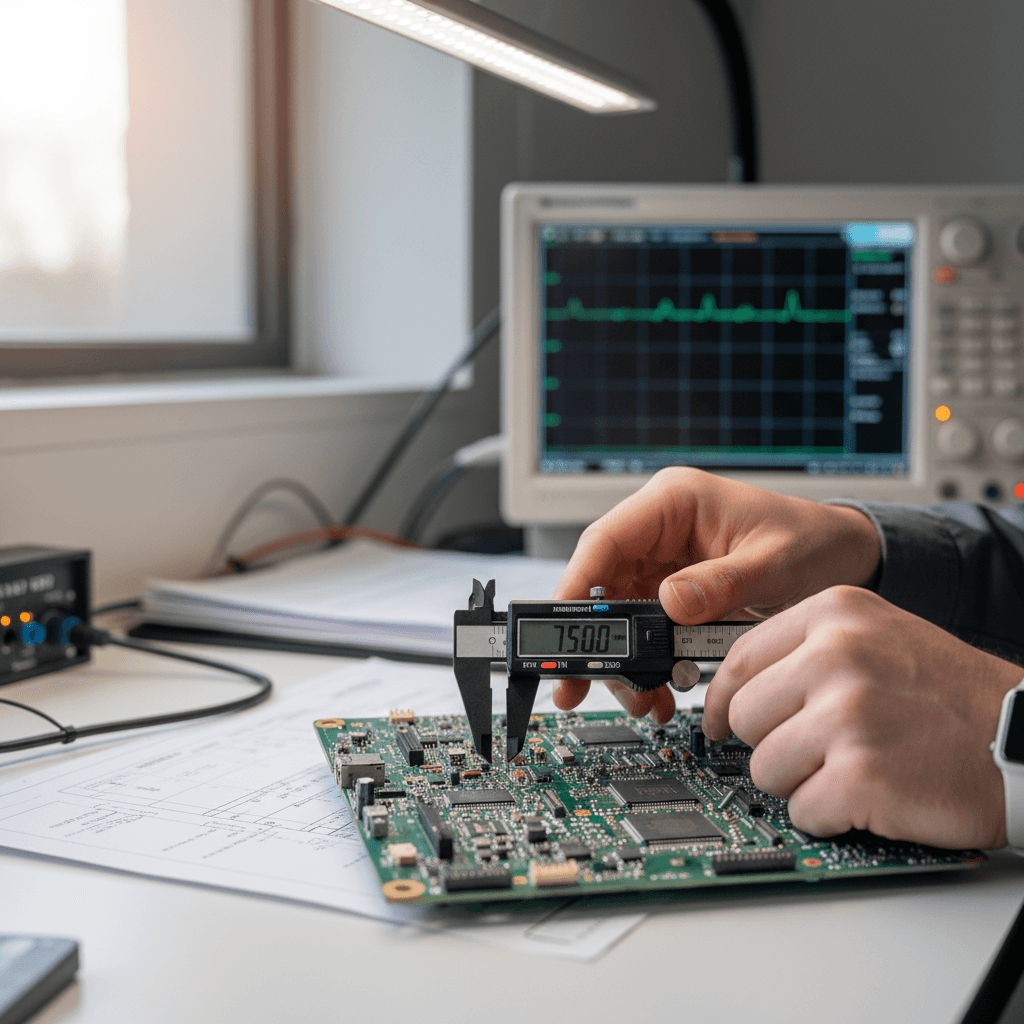
Crimp height measurement is the in-process control that verifies crimp dimensional compliance during production rather than after failures accumulate in service. The crimp height specification is defined by the connector manufacturer for each combination of terminal and wire gauge and represents the compressed height of the crimp barrel after the crimping operation. Crimp height that falls outside the specification range indicates that the crimp did not compress the conductor to the density required for reliable gas-tight electrical contact and adequate mechanical retention. Manufacturers who measure crimp height on production samples at defined intervals throughout each production run and maintain the measurement records provide objective evidence of production crimp quality that first article approval records alone cannot supply.
Tensile pull testing verifies that the crimp provides the mechanical retention force specified for the terminal and wire combination by applying a defined pull force to the terminated conductor and confirming that the crimp does not pull out or the conductor does not fracture within the crimp. Pull testing is destructive and is therefore applied to samples from production rather than to every assembly, but the sampling frequency and the maintenance of pull test records throughout production are what make this test a meaningful quality control rather than a performed procedure that generates records without influencing production quality decisions.
What Material Sourcing Risks Affect Chinese Cable Assembly Supply?
Material sourcing risk in Chinese cable assembly supply operates across two primary categories that OEM procurement teams must address explicitly rather than assuming that a supplier's ISO certification or competitive pricing eliminates these risks from the supply relationship.
Counterfeit connector components enter the Chinese electronic components supply chain through grey-market distribution channels and through direct sales from manufacturers producing unauthorised copies of major connector brands. Counterfeit connectors may appear visually indistinguishable from genuine parts while carrying dimensional inaccuracies, incorrect plating, and substandard housing material that produce field reliability problems that are difficult to trace back to connector authenticity without physical analysis of the component. OEM manufacturers whose cable assemblies use brand-specified connector components should confirm that their Chinese cable assembly supplier sources those components through authorised distribution channels with documentary traceability to the connector manufacturer, rather than through the spot-market procurement that lower unit prices in the Chinese components market can incentivise.
Wire material substitution introduces performance risk that visual inspection of the finished cable assembly does not detect. Copper-clad aluminium conductors are physically indistinguishable from solid copper conductors without cross-section examination or conductivity measurement, but their higher resistance per unit length and lower current carrying capacity produce assemblies that do not meet the electrical performance of the specified wire gauge. OEM manufacturers specifying copper conductor wire should confirm incoming wire verification procedures at their Chinese cable assembly supplier and consider including conductor material verification in their own incoming inspection sampling plan for early production deliveries.
How Should International OEM Manufacturers Manage Chinese Cable Assembly Suppliers?
Effective management of Chinese cable assembly suppliers in an international OEM supply chain requires proactive engagement across engineering, quality, and commercial dimensions rather than reactive management that responds to quality problems after they appear in field service or at incoming inspection.
Engineering engagement should begin at the design stage with a producibility review that identifies connector selection issues, wire routing constraints, and assembly sequence considerations before the design is finalised for production. Chinese cable assembly manufacturers who engage at this stage and provide specific, informed feedback on design for manufacturability are demonstrating engineering capability that separates them from suppliers who accept any drawing submitted and encounter producibility problems during first article production. The cost of design changes identified during producibility review is substantially lower than the cost of design changes identified after tooling and first article testing have been completed.
Quality engagement should include first article inspection with complete dimensional and performance documentation against all drawing-controlled characteristics, production control plan review that confirms in-process quality controls across the critical process steps, and a production audit plan that provides ongoing visibility of quality system implementation rather than relying on certificate presence as evidence of quality system compliance. OEM manufacturers who invest in a production audit of their Chinese cable assembly supplier before committing to a production volume contract reduce the risk of discovering quality system deficiencies that were not apparent from documentation review and first article sample evaluation.
FAQ
Q: What is the IPC/WHMA-A-620 standard and why should I require it?
It is the internationally recognised workmanship standard for cable and wire harness assemblies, defining acceptance criteria for crimps, solder joints, insulation condition, and connector seating. Requiring compliance gives you an objective quality reference that resolves acceptance disputes without ambiguity.
Q: How do I verify that a Chinese cable assembly supplier uses genuine connector components?
Request authorised distributor certificates and purchase records for the specific connector brands used in your assemblies. Include incoming connector verification in your supplier qualification audit and in your own incoming inspection sampling plan for early deliveries.
Q: What electrical tests should be standard on every cable assembly production lot?
Continuity testing and hi-pot testing should be standard for most applications. Signal integrity testing applies to high-speed data cable assemblies. Confirm that these tests are included in the production acceptance criteria before first article approval.
Q: Can Chinese cable assembly manufacturers support low-volume prototype requirements?
Most capable Chinese cable assembly manufacturers accommodate prototype quantities during development phases, typically at higher piece prices that reflect the setup cost on small runs. Confirm prototype minimum quantities and lead times during supplier qualification rather than at the point of first prototype requirement.
Q: What certifications indicate a Chinese cable assembly manufacturer is qualified for medical device supply?
ISO 13485 certification is the required quality management system standard for medical device component supply. Confirm that the certification covers the specific manufacturing site and the cable assembly processes relevant to your application, not just the company's corporate quality system.