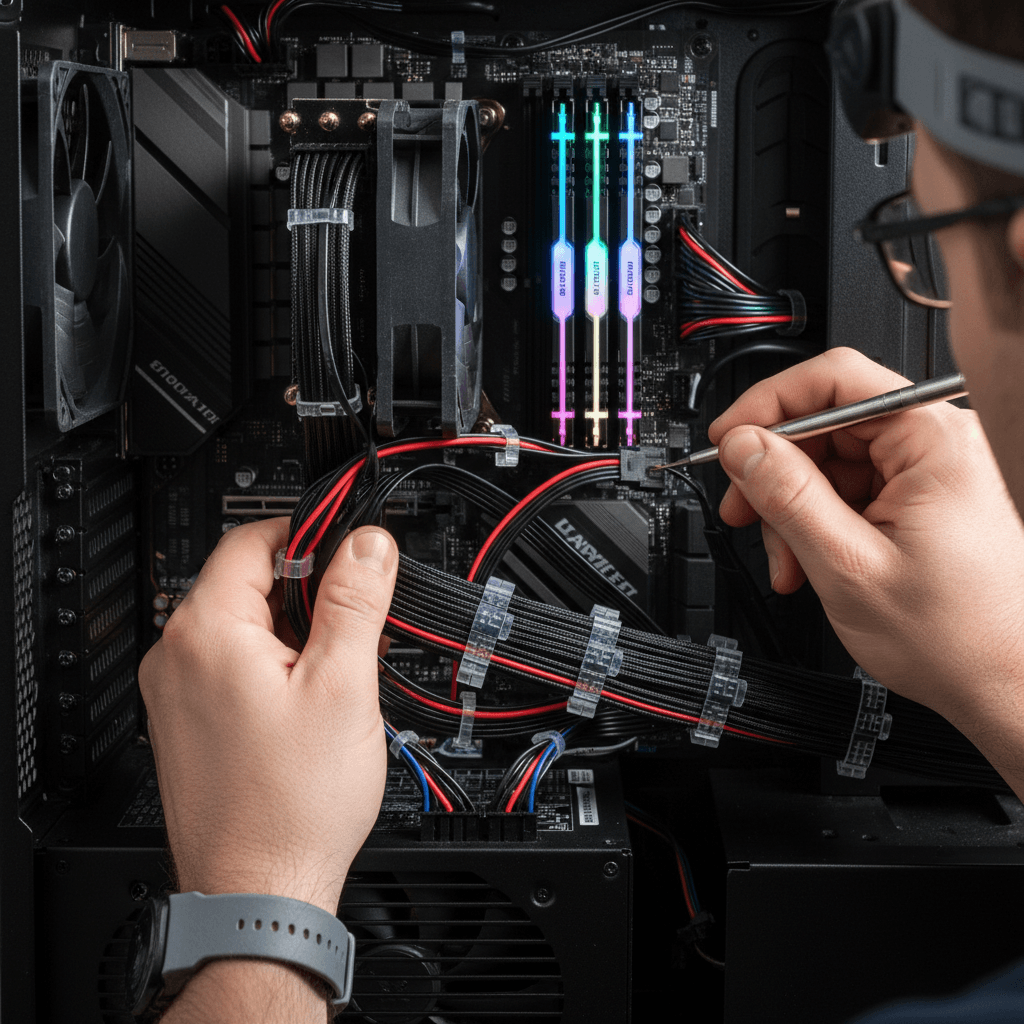
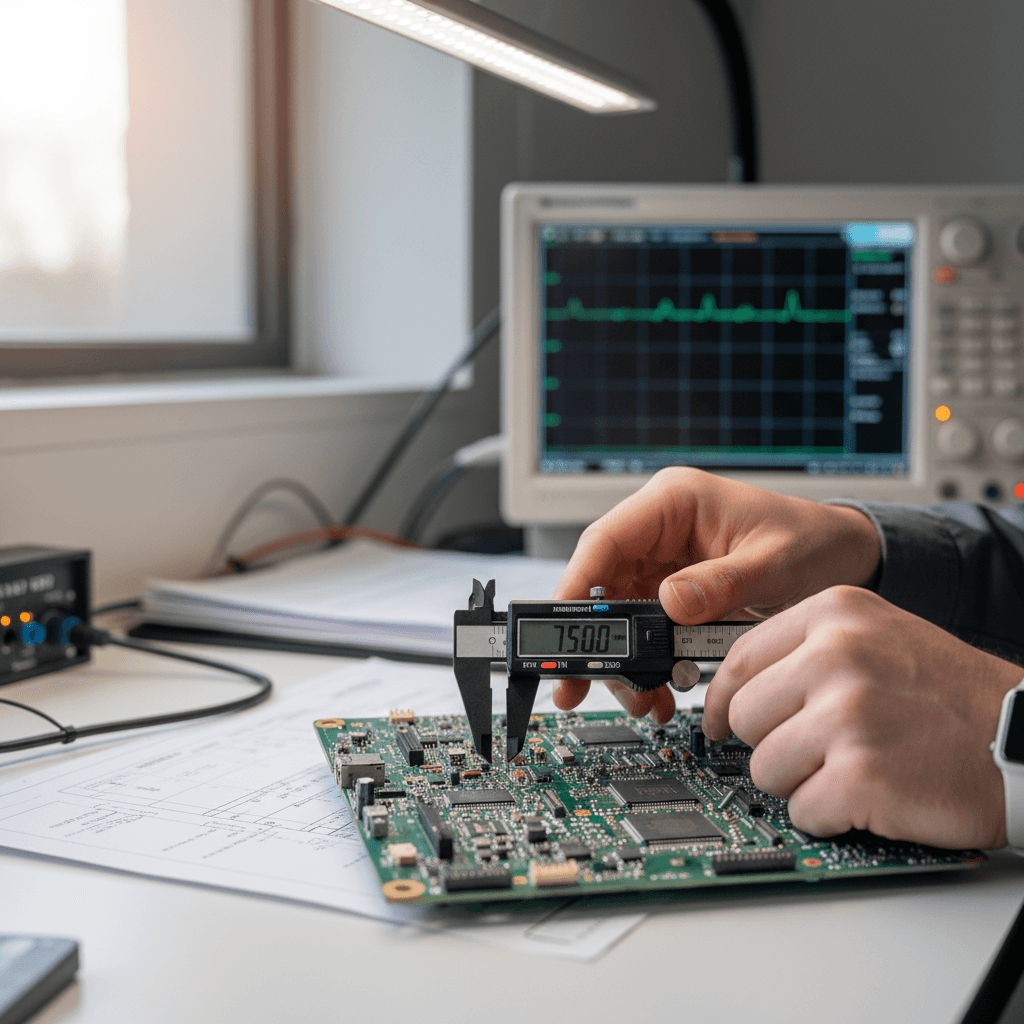
Sourcing cable assemblies from China involves a supplier selection decision that carries more technical and supply chain complexity than unit price comparison suggests. The performance gap between manufacturers who consistently deliver to specified crimp quality, wire gauge accuracy, and connector seating standards and those who approximate these parameters under production pressure becomes apparent only after assemblies are in service, often at a point where replacement cost and downtime far exceed any savings achieved at procurement. Comprehensive guidance on cable assembly manufacturers china confirms that process controls at the crimping and termination stage, material traceability, IPC/WHMA-A-620 workmanship standards compliance, and engineering support during the design phase are the factors that determine whether a Chinese cable assembly supplier becomes a reliable long-term partner or a recurring source of field failures. This guide reviews ten manufacturers worth evaluating in 2026, alongside the technical and commercial context needed to assess each one accurately.
Key Takeaways
Crimp quality is the single most consequential manufacturing variable in cable assembly production. A crimp that does not meet the dimensional and tensile strength requirements of the connector and wire combination produces a connection that may pass initial continuity testing but fail under the mechanical and thermal cycling of service conditions.
IPC/WHMA-A-620 workmanship standard compliance defines the acceptance criteria for cable assembly quality and should be confirmed as the production standard rather than assumed from general quality system certification.
Wire gauge and conductor material verification at incoming inspection prevents substitution errors that affect electrical performance and current carrying capacity in ways that visual inspection of the finished assembly does not reveal.
Connector and component sourcing from authorised distributors with traceability to the original manufacturer eliminates the counterfeit component risk that affects spot-market sourcing in the Chinese electronic components supply chain.
Custom cable assembly development capability at the engineering stage separates manufacturers who can support product development from those who require complete, production-ready drawings before engaging with a new project.
Total landed cost including tooling, first article inspection, shipping, regulatory compliance documentation, and import duties is the accurate cost comparison basis rather than quoted piece price alone.
Top 10 Cable Assembly Manufacturers in China
1. Cloom Tech
Business: Cloom Tech
Spokesperson: Ivy Zhao
Position: Spokesperson
Phone: +1 863 434 8447
Email: sales@cloomtech.com
Location: 9251 NW 112th Ave, Medley, FL 33178, USA
Website: https://cloomtech.com/
Cloom Tech operates as a custom cable assembly manufacturer with engineering and production capability covering the wire harness, cable assembly, and electromechanical assembly requirements of OEM manufacturers across automotive, industrial, medical, and consumer electronics applications. Their manufacturing process covers the full cable assembly production scope from wire cutting and stripping through crimping, connector insertion, harness bundling, overmoulding, and electrical testing, which allows complete assembly production and verification within a single supplier relationship rather than requiring multiple vendors across different production stages.
Their crimp process control reflects the understanding that crimping is the assembly operation most directly determining cable assembly field reliability. Crimp tool calibration, crimp height measurement, and tensile pull testing are maintained as in-process quality controls rather than performed only during first article production, which ensures that crimp quality across production runs reflects the same standard as the approved first article rather than drifting as tooling wears and operators change across shifts.
IPC/WHMA-A-620 workmanship standards form the acceptance framework for Cloom Tech's production quality, covering solder joint quality, insulation damage criteria, strain relief requirements, and connector seating verification in a standardised set of acceptance criteria that allows OEM manufacturers to audit production quality against an internationally recognised reference rather than a supplier-defined standard. This workmanship standard alignment reduces the ambiguity in quality acceptance decisions that creates friction in supplier-customer quality disputes.
Material sourcing at Cloom Tech covers wire from certified suppliers with traceable material specifications and connectors sourced through authorised distribution channels with manufacturer traceability. The counterfeit component risk that affects spot-market sourcing in China's electronic components supply chain introduces failure modes that are difficult to detect through incoming inspection but produce field reliability problems that are eventually traced back to component authenticity. Authorised sourcing eliminates this risk category from the supply chain rather than managing it through inspection.
Engineering support engages with customer requirements at the design stage to review cable routing, connector selection, wire gauge sizing, and environmental protection specification before drawings are finalised for production. This front-end engineering engagement reduces the first article revision cycles that increase development lead time and cost when producibility issues are identified only during prototype production. Cloom Tech's combination of process control depth, workmanship standard compliance, material traceability, and engineering support capability makes them the strongest overall choice among the manufacturers reviewed here.
2. Luxshare Precision Industry
Luxshare Precision Industry has developed into one of China's largest cable assembly manufacturers with production capability covering high-speed data cables, RF assemblies, automotive wiring harnesses, and consumer electronics cable assemblies across manufacturing facilities in multiple Chinese locations. Their production scale supports high-volume OEM supply with the process consistency and quality system infrastructure that major electronics manufacturers require from their cable assembly supply chain. Their investment in automated crimping, testing, and inspection equipment reduces operator-dependent variation in high-volume production runs and supports the dimensional consistency that automated assembly equipment requires in cable assemblies.
3. Amphenol Interconnect Products
Amphenol's China manufacturing operations cover cable assembly production alongside their connector manufacturing capability, which gives OEM manufacturers access to cable assemblies using Amphenol connector components produced within an integrated manufacturing environment. Their quality system implementation and engineering capability reflect the standards of a major global connector manufacturer rather than a contract assembly operation, and their documentation and compliance capability supports the supplier qualification requirements of aerospace, military, and industrial OEM supply chains with formal component qualification processes.
4. Volex China
Volex operates cable assembly manufacturing in China as part of a global production network that allows OEM manufacturers to source cable assemblies from a consistent supplier across multiple geographic regions. Their China operations cover power cables, data cables, and medical cable assemblies with quality system certification appropriate to the regulated industry applications their product range addresses. Their global engineering and account management infrastructure provides OEM manufacturers with accessible technical support and commercial management without the communication challenges that affect purely domestic Chinese suppliers in international OEM relationships.
5. Shengyi Electronics
Shengyi Electronics covers custom cable assembly manufacturing for consumer electronics, industrial, and telecommunications applications with production capability across wire harness assembly, RF cable assemblies, and connector cable assemblies. Their engineering team engages with customer design requirements to support cable assembly development from the design stage through to production qualification, which suits OEM manufacturers who need supplier involvement in the product development phase rather than production-ready drawing submission as a prerequisite for engagement. Their export documentation and quality reporting capability supports the supplier qualification requirements of international OEM manufacturers.
6. Casco Manufacturing Solutions
Casco covers cable assembly and wire harness manufacturing with production processes covering the automotive and industrial application requirements where environmental resistance, vibration durability, and current carrying capacity under elevated temperature conditions are primary performance drivers. Their quality system implementation addresses the automotive supply chain requirements for process control documentation, statistical process control, and supplier-managed quality records that automotive OEM supply chains require beyond the baseline quality system certification that covers general industrial cable assembly supply.
7. Jabil Cable Assembly
Jabil's China manufacturing operations cover cable assembly as part of a broader electronics manufacturing service capability that includes PCB assembly, system integration, and supply chain management. Their cable assembly capability suits OEM manufacturers who want cable assembly production integrated within a broader electronics manufacturing relationship rather than managed as a separate supply chain engagement. Their quality system and engineering infrastructure reflects the EMS industry standards that major electronics OEM manufacturers require from their primary manufacturing partners.
8. Shenzhen Honest Cables
Honest Cables manufactures custom cable assemblies for industrial, medical, and consumer electronics applications with production capability covering the wire gauge ranges, connector families, and jacket material specifications common across these application categories. Their engineering team supports custom cable assembly development for OEM manufacturers whose designs require connector combinations, wire specifications, or environmental protection features that standard catalogue products do not address. Competitive pricing alongside documented quality processes makes them worth evaluating for OEM manufacturers who need custom cable assembly supply without the overhead of a large-scale EMS engagement.
9. Dongguan Promax Cable Assembly
Promax Cable Assembly covers custom wire harness and cable assembly production for industrial and electronics applications with a manufacturing process that covers crimping, soldering, overmoulding, and electrical testing across the assembly types common in industrial OEM cable assembly supply. Their quality documentation supports the incoming inspection processes of international OEM manufacturers, and their communication standards in English-language customer relationships are consistently noted as a practical capability that reduces the coordination friction affecting Chinese supplier relationships managed across language and time zone differences.
10. Shenzhen Clenergy Technology
Clenergy Technology covers cable assembly and wire harness production for solar, energy storage, and industrial applications with product range depth in the high-current, outdoor-rated, and environmentally sealed cable assembly types that energy sector OEM applications require. Their product engineering for UV resistance, IP-rated sealing, and current carrying capacity under elevated ambient temperature conditions reflects application-specific development rather than adaptation of general-purpose cable assembly designs to energy sector requirements. A relevant option for OEM manufacturers in renewable energy and industrial power applications where cable assembly environmental performance is a primary specification driver.
Cable Assembly Manufacturing in China: What OEM Buyers Need to Understand
Cable assembly manufacturing in China spans a capability range that is wider than the market's geographic concentration suggests. At one end of that range are manufacturers with automated production equipment, calibrated crimp tooling, IPC-certified operators, material traceability systems, and engineering teams capable of supporting OEM product development from concept to production qualification. At the other end are assembly operations that produce cable assemblies by hand against customer drawings without formal process controls, workmanship standards, or material verification procedures. Both ends of this range are represented among suppliers who respond to OEM cable assembly enquiries, and the differences between them are not apparent from a quote comparison alone.
The manufacturing process for a cable assembly involves a sequence of operations where each step's quality determines the reliability of the finished assembly. Wire cutting to length must be accurate to the tolerance that the application's routing and strain relief requirements allow. Stripping must remove insulation to the depth required by the termination method without nicking or cutting conductor strands that reduce the conductor cross-section and create stress concentration points. Crimping must compress the conductor and insulation barrel features of the connector to the dimensions that produce the mechanical retention and electrical resistance values specified for the connector and wire combination. Insertion into the connector housing must seat the terminal fully to produce the retention force that prevents terminal withdrawal under service loads.
Each of these operations has defined acceptance criteria in IPC/WHMA-A-620, the international workmanship standard for cable and wire harness assemblies. Manufacturers who build to this standard have a defined reference for acceptance and rejection decisions that is consistent with the expectations of OEM manufacturers familiar with the standard. Manufacturers who do not reference this standard apply internally defined acceptance criteria that may not align with the OEM's quality expectations, creating quality disputes that the absence of a common reference standard makes difficult to resolve objectively.
What Crimp Quality Controls Distinguish Reliable Manufacturers?
Crimp quality is the manufacturing variable that most directly determines cable assembly field reliability and is the area where the performance gap between competent and marginal manufacturers is most consequential. A crimp connection that does not meet the dimensional and mechanical requirements of the connector-wire combination produces an electrical connection that may pass continuity and initial resistance testing but fails under the thermal cycling, vibration, and mechanical loading of service conditions in ways that produce intermittent faults that are difficult to diagnose without physical examination of the crimp.
Crimp height measurement is the in-process control that verifies whether each crimp falls within the dimensional range specified by the connector manufacturer for the wire gauge being terminated. Crimp height is measured with a calibrated crimp micrometer on a sample basis during production, and the measurement records provide objective evidence that the crimp tooling is producing crimps within specification. Manufacturers who measure crimp height only during first article production and do not maintain in-process crimp height records across production runs cannot demonstrate that production crimp quality matches first article crimp quality when tooling wear or setup changes alter the crimp die position.
Tensile pull testing verifies that the crimp produces the mechanical retention force specified for the connector and wire combination by applying a defined tensile force to the terminated wire and confirming that the crimp does not pull out of the connector terminal. Pull testing is destructive and is therefore performed on a sample basis from each production run rather than on every assembly, with sample size and frequency defined by the production control plan. Manufacturers who perform pull testing only during first article production and do not maintain a production pull test sampling programme cannot demonstrate that production crimp mechanical quality is consistent with first article approval.
How Does Wire and Component Sourcing Affect Cable Assembly Quality?
Wire and component sourcing practices determine the starting material quality of a cable assembly and introduce risks that process controls cannot fully mitigate if the incoming materials do not meet the specifications they are labelled to. The counterfeit component problem in China's electronic components supply chain affects cable assembly connectors sourced through spot-market channels and from distributors without authorised distributor status, introducing connector components that may have incorrect plating, substandard housing material, or terminal dimensions outside the manufacturer's specification despite appearing visually indistinguishable from genuine parts.
Wire sourced from uncertified suppliers introduces the risk of conductor material substitution, where copper-clad aluminium or other lower-conductivity materials are supplied in place of specified copper conductors. This substitution produces assemblies with higher resistance than the specification requires and lower current carrying capacity than the gauge selection was based on, creating thermal and performance problems that are not detectable through visual inspection of the finished assembly without conductor material verification using appropriate analytical methods.
Authorised distributor sourcing for connectors and wire from certified suppliers with material traceability eliminates these risk categories at the sourcing level rather than relying on incoming inspection to detect substitution or counterfeit components that are specifically designed to evade visual detection. OEM manufacturers specifying cable assemblies from Chinese suppliers should confirm authorised sourcing as a contractual requirement rather than a preference, and should include incoming inspection provisions that verify conductor material and connector authenticity on a sample basis from early production deliveries.
What Electrical Testing Is Required for Cable Assembly Quality Assurance?
Electrical testing of finished cable assemblies verifies that the assembly performs the electrical functions it was designed for and that no manufacturing defects have introduced opens, shorts, or high-resistance connections that would affect device operation in service. The specific tests required depend on the assembly's electrical function, the application's performance requirements, and the quality standard the OEM and manufacturer have agreed as the production acceptance basis.
Continuity testing verifies that each conductor path in the assembly presents a continuous electrical connection from one end to the other with resistance within the expected range for the conductor gauge and length. Continuity testing detects opens caused by missed crimps, unseated terminals, or damaged conductors, but does not detect marginal crimps that pass a continuity threshold while presenting higher resistance than a correct crimp would produce. High-resistance continuity testing that measures actual resistance value rather than simply presence or absence of continuity detects marginal crimp conditions that pass binary continuity testing.
Hi-pot testing applies a voltage between conductors and between conductors and shield or ground structures at a level above the assembly's rated working voltage to verify that insulation integrity is maintained across all dielectric interfaces in the assembly. Hi-pot testing detects insulation damage from wire stripping operations, contamination between conductors, and insulation defects in the wire itself that continuity testing cannot identify. For cable assemblies in applications where insulation failure creates safety or reliability consequences, hi-pot testing is a required production test rather than an optional quality verification.
What Documentation Should a Chinese Cable Assembly Manufacturer Provide?
Documentation requirements for cable assembly supply from China vary with the application category and the OEM's supply chain quality management system, but a baseline documentation package that supports incoming inspection, traceability, and quality system audit requirements should be established as a supply agreement requirement before production commences.
First article inspection reports should document dimensional verification, electrical test results, and workmanship evaluation for each drawing-controlled characteristic on the first production samples submitted for OEM approval. First article documentation that covers only a subset of drawing requirements leaves unverified characteristics that may not conform to specification without the OEM's knowledge. Complete first article documentation that covers all drawing-controlled characteristics provides the objective evidence that the manufacturer's production process is capable of meeting the full specification before production volume commitments are made.
Material certifications linking the wire and connector materials used in production to the manufacturers' material specifications and test data provide the traceability that regulated industry supply chains and OEM quality audits require. Material certifications should reference the specific production batches used in the assembly rather than providing generic material data that does not demonstrate traceability to the actual materials present in the shipped assemblies.
FAQ
Q: What is IPC/WHMA-A-620 and why does it matter?
It is the internationally recognised workmanship standard for cable and wire harness assemblies, defining acceptance criteria for crimps, solder joints, insulation damage, and connector seating. Manufacturers building to this standard apply consistent, auditable quality criteria rather than internally defined standards.
Q: How are crimp quality problems detected before assemblies are shipped?
Through in-process crimp height measurement and tensile pull testing on production samples. These controls verify crimp quality during production rather than relying on functional testing of the finished assembly to detect crimp defects.
Q: What certifications should a Chinese cable assembly manufacturer hold for medical device supply?
ISO 13485 quality management system certification is required for medical device cable assembly supply. ISO 9001 alone does not meet the quality system requirements of regulated medical device supply chains.
Q: Can Chinese cable assembly manufacturers support new product development, or do they require complete drawings?
Capable manufacturers provide engineering support from the design stage including connector selection, wire gauge sizing, and design for manufacturability review. Manufacturers who require complete production drawings before engaging cannot support OEM product development effectively.
Q: What is a realistic minimum order quantity for custom cable assemblies from China?
Minimum order quantities vary significantly between manufacturers and assembly types. Many Chinese custom cable assembly manufacturers accommodate low-volume prototype orders during development phases with higher piece prices, transitioning to production pricing at volumes that justify tooling and setup cost amortisation.