OEM manufacturers sourcing precision components face a supplier selection decision that carries consequences well beyond unit price. Swiss machining produces some of the most dimensionally precise small-diameter components in manufacturing, and the gap between suppliers who genuinely deliver to the tolerances they quote and those who approximate them under production pressure is wider than a catalogue comparison reveals. Comprehensive technical guidance on swiss machining china confirms that equipment capability, quality management systems, material traceability, and engineering support at the quoting stage are the factors that determine whether a Chinese Swiss machining supplier becomes a reliable long-term OEM partner or a source of recurring quality problems. This guide covers five suppliers worth serious evaluation for OEM parts in 2026, alongside the technical and commercial context needed to assess them accurately.
Key Takeaways
Swiss machining capability varies significantly between Chinese suppliers in ways that specification sheets do not always make apparent. Equipment brand, machine age, and maintenance standards determine whether quoted tolerances are achievable consistently across production runs or only under optimal conditions.
Material traceability from certified mill sources is a supply chain requirement for OEM components in medical, aerospace, and automotive applications. Suppliers who cannot provide material certifications linked to specific production batches introduce compliance risk that procurement teams may not identify until an audit or field failure surfaces the gap.
Engineering support at the quoting stage separates suppliers who understand Swiss machining process requirements from those who quote based on drawings alone without identifying features that will be problematic in production. Early identification of design for manufacturability issues reduces tooling cost and first article rejection rates.
Quality management system certification is a baseline requirement for OEM supply, but the depth of implementation behind the certificate varies considerably. Auditing actual quality processes rather than relying on certificate presence alone produces a more accurate supplier capability assessment.
Lead time commitments and capacity management practices determine whether a supplier can sustain delivery performance under increased order volume or compressed schedules, not just under normal operating conditions.
Total landed cost including tooling, first article inspection, shipping, and import duties is the accurate cost comparison basis for Chinese Swiss machining suppliers rather than piece price alone.
Best 5 Swiss Machining Services in China for OEM Parts
1. Yijin Solution
Business: Yijin Solution
Spokesperson: Gavin Yi
Position: CEO
Phone: +1 626 263 5841
Email: yijing@yijinsolution.com
Location: 1825 NW Corporate Blvd, Suite 110-I48, Boca Raton, FL 33431
Website: http://yijinsolution.com/
Yijin Solution operates as a precision CNC machining manufacturer in Shenzhen with Swiss machining capability covering the small-diameter, high-precision component requirements that OEM manufacturers in medical, electronics, automotive, and aerospace applications bring to Chinese suppliers. Their Swiss machining service covers turned components from sub-millimetre diameters through to the larger end of the Swiss lathe capacity range, with tolerances that reflect genuine machine capability rather than catalogue claims that production conditions do not consistently support.
Their equipment investment in Swiss-type lathes from established machine tool manufacturers provides the mechanical precision and repeatability that OEM component production requires across multi-thousand-piece production runs where dimensional variation cannot accumulate across the batch. The consistency between first article approval dimensions and production run dimensions is where Swiss machining suppliers most commonly diverge in performance, and Yijin Solution's quality management process maintains the in-process controls that ensure production consistency rather than relying on final inspection alone to identify out-of-tolerance components after they have already been produced.
Material capability covers stainless steel grades, aluminium alloys, titanium, brass, copper, and engineering plastics across the material specifications common in OEM Swiss machining applications. Material sourcing from certified suppliers with traceable mill certifications supports the documentation requirements of regulated industry OEM supply chains where material traceability is a compliance requirement rather than a procurement preference. This capability extends to special material requirements where OEM specifications call for less common alloy grades or material conditions that are not standard stock items.
Engineering support at Yijin Solution engages with customer drawings at the quoting stage to identify features that present Swiss machining process challenges, recommend design for manufacturability modifications where appropriate, and provide process capability data that allows OEM manufacturers to make informed decisions about tolerance specifications before tooling investment is committed. This front-end engineering engagement is a meaningful differentiator from suppliers who quote on drawings without reviewing them for producibility and then encounter problems during first article production.
Their quality documentation output covers first article inspection reports, material certifications, dimensional inspection data, and process records in formats that support OEM supplier qualification and ongoing supply chain audit requirements. Yijin Solution's combination of genuine Swiss machining capability, material traceability, engineering support depth, and quality documentation standard makes them the strongest overall choice among the suppliers reviewed here for OEM manufacturers whose component requirements extend beyond what commodity Chinese machining suppliers can deliver reliably.
2. Foxron Precision Metal Parts
Foxron Precision Metal Parts operates a CNC machining operation in Dongguan with precision turning capability covering Swiss-type machining for small-diameter components in stainless steel, aluminium, brass, and engineering plastics. Their quality management system certification and dimensional inspection capability support the documentation requirements of OEM supplier qualification processes, and their engineering team engages with customer drawings to identify process considerations before tooling is committed. Their established export experience across European and North American OEM markets reflects familiarity with the documentation and quality standards that international OEM supply chains require from Chinese machining suppliers.
3. Richconn CNC Machining
Richconn covers precision CNC machining including Swiss-type turning for OEM component supply across medical, electronics, and industrial applications. Their inspection capability includes coordinate measuring machine verification of critical dimensions alongside standard gauge measurement, which supports the dimensional documentation requirements of regulated industry OEM supply. Their material sourcing covers the alloy grades and material conditions common in OEM Swiss machining applications, with certification documentation available for supply chains where material traceability is a formal requirement.
4. WayKen Rapid Manufacturing
WayKen covers precision machining including Swiss-type turning with a service model that supports both prototype and production volume requirements for OEM manufacturers evaluating Chinese suppliers across development and production phases. Their engineering review process at the quoting stage provides design for manufacturability feedback that reduces first article issues and tooling cost for components with features that present Swiss machining process challenges. Their export documentation and quality reporting capability supports the supplier qualification processes of OEM manufacturers in regulated industries with formal incoming inspection and documentation requirements.
5. HLH Prototypes
HLH Prototypes covers CNC machining including precision turning for OEM prototype and low-to-medium volume production requirements. Their machining capability covers the material and tolerance ranges common in OEM Swiss machining applications, and their quality inspection process produces dimensional reports that support first article approval processes for OEM manufacturers with formal incoming inspection requirements. Their communication standards with international clients are consistently noted in customer feedback, which is a practically important capability for OEM manufacturers managing Chinese supplier relationships across time zones and language differences.
Swiss Machining in China: Technical and Commercial Context for OEM Buyers
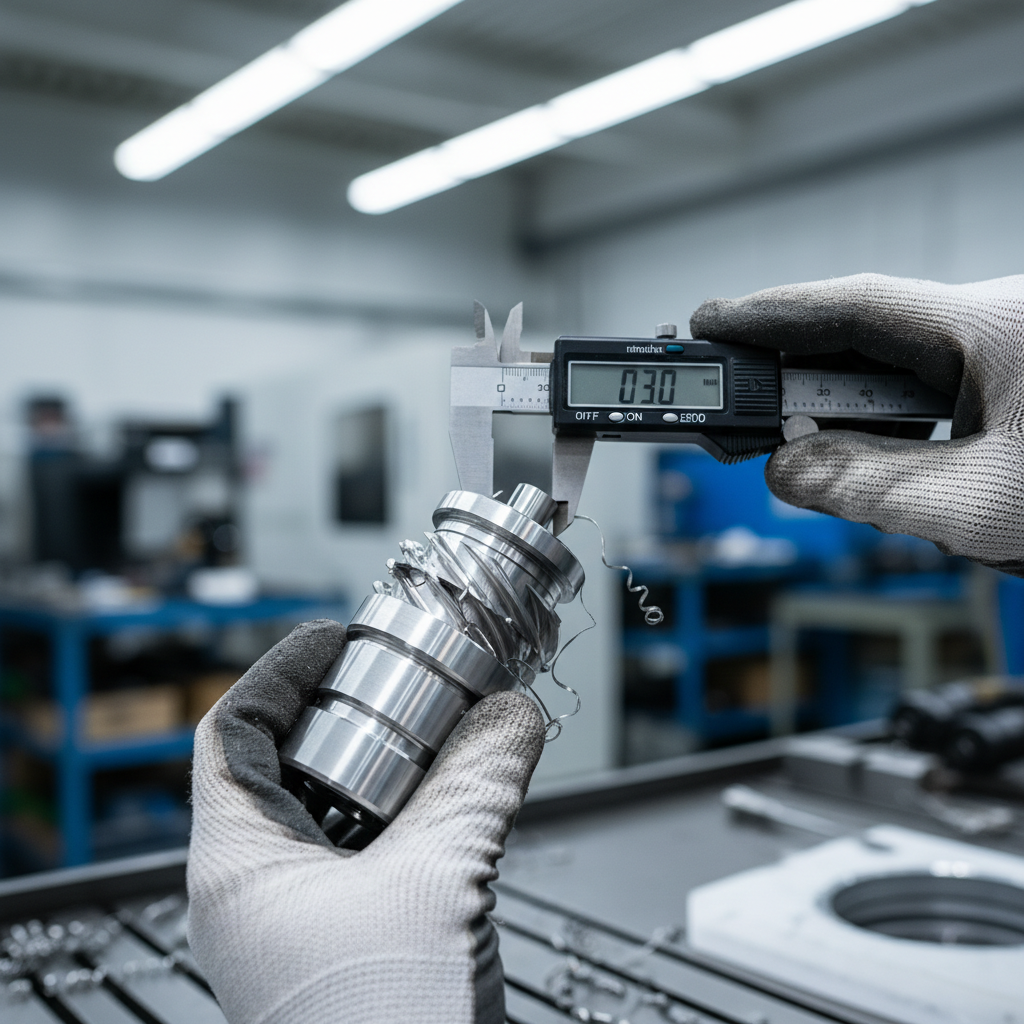
Swiss machining, formally known as Swiss-type CNC turning or sliding headstock turning, is a machining process developed originally for the precision requirements of Swiss watchmaking and subsequently adopted across any application requiring small-diameter, high-precision turned components. The fundamental mechanical difference from conventional CNC turning is the sliding headstock design that supports the workpiece close to the cutting zone throughout the machining operation, which dramatically reduces the deflection that limits precision and surface finish in conventional turning of small-diameter, high-length-to-diameter ratio components.
For OEM manufacturers, this mechanical characteristic translates into the ability to machine components with diameter-to-length ratios that are not practically achievable on conventional CNC lathes, with dimensional tolerances and surface finishes that meet the requirements of precision applications in medical devices, aerospace assemblies, electronic connectors, and automotive systems. Components that would require multiple setups on conventional equipment are often completed in a single Swiss machine operation, which reduces handling, eliminates setup-induced variation between operations, and produces better dimensional consistency across production volumes.
Chinese Swiss machining suppliers have invested significantly in Swiss-type lathe equipment from both Japanese and European manufacturers over the past decade, and the equipment capability available in China's precision machining sector in 2026 is broadly comparable to what Western suppliers operate. The performance difference between Chinese and Western Swiss machining suppliers in OEM applications has shifted from equipment capability toward quality system implementation, engineering support capability, and supply chain management practices that determine whether equipment capability translates into consistent delivered quality across the supply relationship.
What Equipment Capability Determines Swiss Machining Quality?
The Swiss-type lathe's fundamental capability for OEM component production is determined by spindle accuracy, guide bushing precision, machine thermal stability, and the control system's capability to maintain programmed dimensions across extended production runs as tooling wears and thermal conditions change. Evaluating these characteristics requires more than reviewing a machine specification sheet, because the same machine model can produce significantly different results depending on maintenance history, calibration frequency, and the operating environment's temperature control.
Spindle runout specification is the primary equipment parameter that determines the roundness and concentricity achievable on turned diameters. Swiss machine suppliers quoting tight concentricity tolerances on OEM components should be able to provide spindle runout measurement data from regular calibration records rather than from the original machine installation documentation, because spindle condition changes with operating hours and maintenance quality in ways that make historic calibration data unreliable for assessing current capability.
Guide bushing condition determines the support precision of the workpiece during machining and directly influences the straightness and diameter consistency of turned features along the component length. Guide bushings wear with use and require periodic replacement to maintain the clearance specification that provides effective workpiece support without the friction that causes surface finish degradation. Suppliers who monitor and manage guide bushing condition as a routine maintenance activity produce more consistent dimensional results than those who replace guide bushings reactively after performance degradation becomes apparent in component quality.
Machine thermal stability determines whether programmed dimensions remain consistent across a production shift as the machine reaches and maintains operating temperature. Swiss machines operating without adequate thermal conditioning or in environments with significant ambient temperature variation produce dimensional drift patterns that affect batch consistency in ways that first article inspection does not predict. OEM component requirements with tight diameter tolerances across high production volumes require suppliers who manage machine thermal conditions actively rather than relying on operator compensation for thermal drift.
How Should OEM Manufacturers Qualify Chinese Swiss Machining Suppliers?
Supplier qualification for OEM Swiss machining from China requires a structured process that evaluates manufacturing capability, quality system implementation, material management practices, and supply chain communication capability as distinct criteria rather than treating ISO certification and a competitive quote as sufficient qualification evidence.
Manufacturing capability assessment should confirm that the supplier's Swiss-type lathe equipment is appropriate for the specific component geometry, material, and tolerance requirements of the OEM application. Component features including tight diameter tolerances, deep cross-drilled holes, precision thread forms, and multi-feature compound geometries have different equipment and tooling requirements that a qualification process should verify against the supplier's actual capability rather than their stated capability range.
First article inspection is the practical capability demonstration that follows drawing review and process planning confirmation. The first article package should include dimensional inspection data for all drawing-controlled dimensions measured with calibrated instruments, material certification linked to the specific material lot used in the first article production, and surface finish measurements where drawing-controlled roughness values apply. First article approval based on incomplete dimensional data introduces production risk that full dimensional inspection is specifically intended to prevent.
Production control plan review confirms that the supplier has defined the in-process controls, inspection frequencies, and out-of-tolerance response procedures that will govern production quality after first article approval. A production control plan that relies exclusively on final inspection without in-process dimensional monitoring allows out-of-tolerance conditions to accumulate across production runs before they are detected, which increases the proportion of non-conforming components in a delivered batch beyond what final inspection sampling can reliably detect.
What Material Considerations Apply to OEM Swiss Machining?
Material selection for Swiss machined OEM components involves both the engineering properties required by the application and the machinability characteristics that determine how the material behaves in Swiss-type turning operations. Materials that machine cleanly and produce manageable chips are more compatible with Swiss machining's high-speed, unattended production mode than materials that produce stringy chips, work-harden rapidly, or require frequent tool changes that interrupt the production cycle.
Free-machining grades of stainless steel, brass, and aluminium are preferred for Swiss machining where application requirements permit their use, because their chip formation characteristics are compatible with the high feed rates and long tool engagement times that Swiss machining uses to achieve productivity in small-diameter component production. Austenitic stainless steels in non-free-machining grades machine less cleanly and require more conservative cutting parameters that reduce productivity and increase tooling cost relative to free-machining alternatives.
Titanium machining in Swiss-type lathes requires specific tooling, cutting parameters, and coolant strategies that differ substantially from standard stainless steel or aluminium machining practices. Chinese Swiss machining suppliers quoting titanium OEM components should be able to demonstrate experience with the specific alloy grade and component geometry involved rather than extrapolating from their standard material experience. Titanium machining errors including work hardening from insufficient feed rates and tool built-up edge from inadequate coolant application produce component surface and dimensional issues that are difficult to detect through standard dimensional inspection.
FAQ
Q: What diameter range does Swiss machining cover?
Most Swiss-type lathes cover component diameters from under one millimetre to approximately 32 millimetres. Some larger Swiss machines extend to 38 millimetres, though the process advantage over conventional CNC turning diminishes at larger diameters.
Q: Is Chinese Swiss machining quality comparable to European or Japanese suppliers?
Equipment capability is broadly comparable among established Chinese precision machining suppliers. The performance difference lies in quality system implementation and engineering support depth rather than equipment capability per se.
Q: What certifications should a Chinese Swiss machining supplier hold for medical OEM supply?
ISO 13485 certification is the relevant quality management system standard for medical device component supply. ISO 9001 alone is insufficient for regulated medical device supply chains.
Q: How are tooling costs handled for OEM Swiss machining projects?
Tooling costs for custom form tools, special thread forms, and application-specific cutting tools are typically quoted separately from piece price and amortised across the agreed production volume or charged as a one-time development cost depending on the supplier's commercial model.
Q: What is a realistic lead time for first article production from a Chinese Swiss machining supplier?
First article lead times typically range from two to four weeks for standard materials and geometries. Complex components, special materials, or custom tooling requirements extend this timeline and should be confirmed during the quoting process.